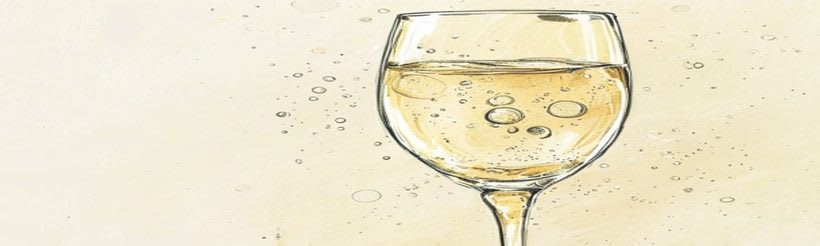
Think about the last time someone opened a bottle of champagne. The occasion almost certainly had a name: a wedding, a promotion, a new year. That association did not grow naturally from the taste of the wine. It was built, piece by piece, over eight centuries, starting with the French kings who insisted on being crowned in one particular city and ending with London merchants who understood that selling a drink and selling a sense of occasion are two different businesses.
Reims was a royal city before the wine had bubbles
Thirty-one French kings were crowned at Reims Cathedral across eight centuries because Reims held the Sainte Ampoule, the Holy Ampulla containing the oil used for anointing. That made the city non-negotiable for the rite. In 987, Hugues Capet became king of France there, setting the pattern every later monarch followed. The formal sequence ran from Henri I in 1027 to Charles X in 1825, and all 31 names are inscribed on a memorial plaque in the cathedral.
That long sequence gave the region a symbolic standing no competitor could replicate. When the local wine began circulating at court, it carried the city's reputation with it. At that point the wine was still flat, mostly red, without a bubble in it. The prestige came from the place; the sparkling part came later.
Dom Pérignon did not invent sparkling champagne
The most durable myth credits the monk Dom Pierre Pérignon with inventing champagne. He arrived at Hautvillers abbey in 1668 and worked there until his death in 1715, genuinely improving blending and wine quality. The legend attached to the right person in the wrong way. He treated the bubbles as a defect and spent years trying to prevent them. Secondary fermentation, the second round of fermentation inside the sealed bottle that produces CO2, caused explosions and real losses.
The first documented description of deliberately adding sugar to carbonate a wine belongs to the English scientist Christopher Merret. He set it out in a paper to the Royal Society on 17 December 1662, six years before Pérignon arrived at the abbey.
The famous line attributed to Pérignon, "Quick, I am drinking stars," is apocryphal, most likely coined in a late-19th-century advertisement. Pérignon's successor Dom Grossard reinforced the legend in 1821 by recounting a heavily embellished version, evidently to serve the abbey's reputation. The quote stuck, and it still appears on marketing copy today.
How Veuve Clicquot made the wine clear and found Russia
By the early 19th century the wine sparkled but left a murky sediment in the bottle that spoiled its appearance. Barbe-Nicole Clicquot Ponsardin, working with winemaker Antoine de Müller, solved this in 1816 by inventing remuage, or riddling as it is called in English. They gradually turned each bottle so the sediment migrated into the neck, where it could be removed. After that the wine was clear.
The first mass market for that clarity turned out to be Russia, reached through a single calculated gamble. In 1814, while Napoleonic blockades were not yet fully lifted, the Clicquot house chartered the Dutch ship Zes Gebroeders and sent 10,550 bottles to Königsberg. Grand Duke Mikhail Pavlovich, the brother of Alexander I, tasted the wine and declared Veuve Clicquot the only champagne he would drink. The shipment sold out immediately. A single endorsement from the right person was enough; the court followed.
How the houses built the image of celebration
The market opened, but the houses still had to turn champagne from a fashionable wine into a mandatory marker of any important event. They did it deliberately, over decades. After the railways arrived, production grew to about 20 million bottles a year by the 1850s. Agents of the French champagne houses in London developed what historians describe as the world's first premium-branding model. They sold along with the wine a place among those who drink the right thing at the right moment.
Between 1870 and 1914 the houses wrote heroic founder biographies, added gold lettering and family crests to their labels, and stamped them with the words "royal," "marquis," "prince." Some merchants married into the aristocracy to appropriate its prestige. Three founding legends anchored the whole system.
- Ruinart. Opened on 1 September 1729, making it the oldest active champagne house.
- Moët. Founded by Claude Moët in 1743, and within a few years its wine reached the court of Louis XV.
- Veuve Clicquot. Founded in 1772, invented riddling, and made the first major breakthrough in Russia.
The court connection itself was planted earlier, in the 18th century, when Claude Moët convinced Madame de Pompadour, the favorite of Louis XV, that the wine suited high-society gatherings. By the late 19th century the campaign had turned champagne into, in historians' words, a "symbol of significance and grandeur" at weddings, ship launches and any public event meant to be announced.
Why the pop still means something
When you open a bottle, the sound is genuine. The sound carries weight that took a very long time to accumulate. Coronations at Reims gave the region its prestige. The court gave champagne its occasion. London agents turned both into something a merchant could sell at scale, and what they sold stuck.
Every bottle opened at a birthday or New Year follows a script that was already old before anyone alive today was born. Knowing where that script came from does not change the taste of the wine. It only changes who is reading the label.
FAQ
- Why is champagne so expensive compared to other sparkling wines?
The Champagne appellation is strictly bounded, the secondary fermentation and riddling process is labor-intensive, and bottles must age for a minimum period before release. A substantial share of the price is also the image assembled since the 19th century by the houses and their agents. You pay for the craft and the cultural weight together.
- Does it matter which champagne house you choose?
If the occasion is the point, the sound and the bubbles are the same regardless of label. If style matters, the major houses differ meaningfully: Veuve Clicquot is fuller and toasty, Moët is consistent and widely available, Ruinart is the lightest and oldest. Each house built its identity over generations specifically to suit different moments and tastes.
- When did champagne at celebrations become a mass habit rather than an elite one?
The royal and aristocratic connection is much older, rooted in the coronations at Reims from 1027. The habit of opening champagne at weddings, ship launches and public events spread broadly between the 1850s and 1914, driven by French houses and their London agents using the first documented premium-branding model.
- Is Dom Pérignon actually connected to champagne in any real way?
He was a real winemaker at Hautvillers abbey from 1668 to 1715 and genuinely improved blending technique. But he treated bubbles as a defect to eliminate, not a feature to develop. The "I am drinking stars" quote is apocryphal, most likely invented for a 19th-century advertisement, and the first documented deliberate carbonation of wine predates him by six years.