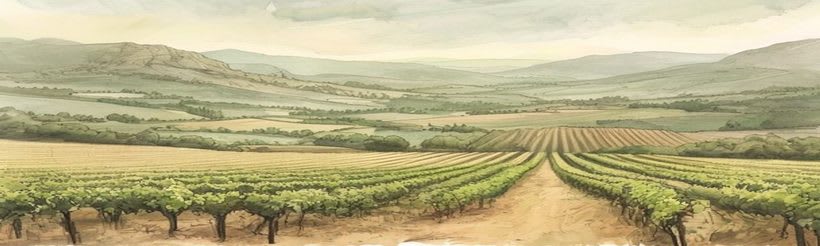
The Cape Winelands lie about an hour's drive east of Cape Town, and they have been making wine here for more than 300 years, since the first vines arrived in 1685. If you have tasted South African Pinotage at home and wondered where the dark plum and smoke come from, this is the place to find out. Stellenbosch anchors the route with the most estates, Franschhoek adds a valley tram and better restaurants, and Constantia holds the oldest vines in the country.
Why wine grows here
Stellenbosch was founded in 1679 on the bank of the Eerste river and named after the governor Simon van der Stel. It is South Africa's second-oldest town, after Cape Town, and it launched the country's first official wine route in 1971. The Stellenbosch district now has about 150 estates open to visitors, spread across five wine routes.
The climate is Mediterranean, warm and dry in summer and cool and wet in winter. That predictable rhythm is what the vines need, and it makes planning a visit straightforward.
South Africa's Wine of Origin (WO) system layers the country into zones, from broad coastal regions down to single-estate labels. Both Stellenbosch and Franschhoek are separate districts within the Coastal Region. Inside the Stellenbosch district there are eight wards: Banghoek, Bottelary, Devon Valley, Jonkershoek Valley, Papegaaiberg, Polkadraai Hills, Simonsberg-Stellenbosch and Vlottenburg. When a ward name appears on a bottle, it tells you which slope the wine came from.
South Africa's signature grape is Pinotage, bred at Stellenbosch University on 17 November 1924 by professor Abraham Izak Perold as a crossing of Pinot Noir and Cinsaut. Cinsaut was historically called Hermitage in South Africa. C.T. de Waal made the first wine from the new variety in 1941, with the first commercial plantings following in 1943. In the glass it shows dark plum, smoke and grilled meat, full-bodied with pronounced tannins. Beyond Pinotage, the region makes Chardonnay, Sauvignon Blanc, Cabernet Sauvignon, Merlot, Shiraz and Bordeaux blends, and Stellenbosch is considered the benchmark for Cabernet and Bordeaux-style reds. Across the whole country, around 86,500 hectares of vines feed more than 500 estates.
Getting there and where to stay
You fly into Cape Town International Airport (CPT). Stellenbosch is about 35 km away, roughly 20 minutes without traffic or 45–60 minutes by shuttle at peak hour. Franschhoek is about 75 km, around an hour and a half. The two towns are about 25 km apart from each other, via the R310 over the Helshoogte pass and then the R45.
For covering both from a single base, Stellenbosch is the more convenient choice because it has more estates and simpler logistics. Franschhoek is smaller and walkable, positioning itself as the region's gastronomic capital. Come to Stellenbosch for estate density, and cross to Franschhoek when the table matters as much as the glass.
A car gives you the most freedom, but if you base yourself in Franschhoek you can manage without one, because the Wine Tram runs the length of the valley.
When to go
Harvest runs roughly from January to April, depending on the variety. Whites are picked earlier, while Pinotage and other reds usually come in during March–April. Mid-summer into autumn brings harvest in progress, reliable sunshine, and every tasting room open. Book the most popular ones in advance for weekends.
December to February is hot and crowded, and inland valleys away from the ocean can get very hot during the day. Spring visits work too, with mild days and none of the December rush. During June through August it is cool and rainy, and estates run at reduced capacity.
If you want to time the trip around a festival, Franschhoek holds the Cap Classique festival devoted to local traditional-method sparkling wine, a literary festival, and a Bastille Day celebration. The name Franschhoek means "French corner," after the roughly 300 Huguenots who settled the valley in 1688 and brought winemaking with them.
The Stellenbosch estates worth visiting
A tasting in Stellenbosch costs roughly 250–400 ZAR per person, which is about 12–20 EUR.
Kanonkop sits at the foot of Simonsberg mountain, in the Simonsberg-Stellenbosch ward. The name comes from a hill where a cannon was once fired to alert ships in Table Bay. The estate became serious in 1919 under Paul Sauer, and the first labeled bottles appeared in 1973 under winemaker Jan Boland Coetzee and manager Jannie Krige. It is now run by brothers Paul and Johann Krige, and its reputation rests on its Pinotage and the Paul Sauer Bordeaux blend.
Delaire Graff Estate sits high on the Helshoogte pass between Stellenbosch and Franschhoek, with two restaurants, a modern cellar, guest lodges, a spa and boutiques, so book ahead, especially on weekends. On the same pass, Tokara makes both wine and its own olive oil, with a wide view over the valley from the hillside.
Waterford Estate, in the Blaauwklippen valley, runs a Land Rover vineyard ride called the "Wine Safari" and a wine-and-chocolate tasting, which is a genuine alternative if a standard tasting room starts to feel like the same experience repeated. Spier, one of the district's oldest farms, offers a Segway vineyard tour alongside a bird-of-prey rehabilitation center on the grounds.
The Wine Tram in Franschhoek
Franschhoek has a hop-on/hop-off Wine Tram, a mix of a double-decker tram and an open tram-bus built on old Blackpool trams. It runs on one of five lines, each covering a different part of the valley, with each stop served about once an hour.
You buy a day ticket, get off at any stop you choose, taste for as long as you want, and catch the next tram. Estate tastings are paid separately, averaging 60–260 ZAR per person per estate. The tram sets the pace, so you are not watching the clock or calculating who is driving.
The number of open lines can vary. One line was not running in 2025 due to road repairs, so check the current routes on the Wine Tram website before you travel.
What to taste
Start with whites, Sauvignon Blanc and Chardonnay, then move through the reds: Merlot, Shiraz, Cabernet Sauvignon and Bordeaux blends. Tasted on its own, Pinotage shows dark plum, smoke and pronounced tannins. Compare it to the Cabernet and Shiraz only after you have a sense of it alone.
If your trip includes Constantia, finish with the Vin de Constance from Klein Constantia. It is a dessert wine made from Muscat de Frontignan, picked late and without botrytis (the noble rot that concentrates many sweet wines). Nothing else in the region is like it.
Food in the region revolves around braai, an open-fire cook-up that doubles as a social occasion. The grill carries a spread of local dishes:
- Boerewors. A coriander-spiced beef sausage coiled in a ring, and the classic match with Pinotage, since the coriander and smoke in the sausage echo Pinotage's smoke and dark fruit, and the fat balances the tannin.
- Biltong. Thinly sliced air-dried meat. The Alto estate runs a tasting of five biltong styles paired with five red wines, and it is worth catching if you come across it.
- Bobotie. Spiced minced meat baked under a layer of egg-and-cream topping.
- Sosaties. Marinated meat on a skewer, usually with a fruit-based marinade.
- Braaibroodjie. Cheese and tomato between two slices of bread, toasted directly on the grill over the coals.
It is not coincidental that the region's signature grape pairs so well with its signature cooking, since the shared smoke and dark fruit, and the tannin weight, belong together.
Two restaurants are worth knowing in advance. De Volkskombuis in Stellenbosch focuses on traditional Cape cuisine and serves Boland Bobotie. Eike, on historic Dorp Street, is where chef Bertus Basson builds a tasting menu of traditional South African dishes with a local wine matched to each course.
Constantia and Vergelegen
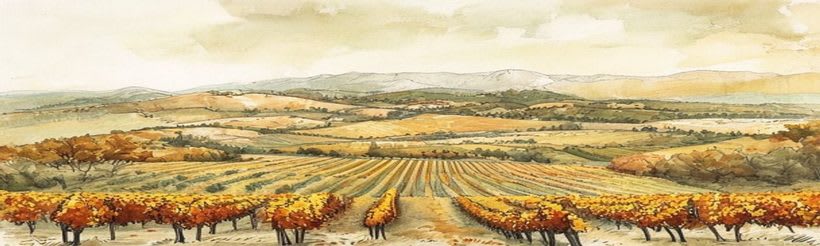
If you have a spare day, drive south of central Cape Town to Constantia. Groot Constantia was founded in 1685 by the same Simon van der Stel who gave Stellenbosch its name, and it is South Africa's oldest wine estate, the site where the country first produced wine at industrial scale.
Klein Constantia split from the same Constantia lands after the estate was divided among Hendrik Cloete's heirs. Today's Klein Constantia traces its history to 1792. In 1986 it revived Vin de Constance, a dessert wine made from Muscat de Frontignan following an 18th-century recipe. This is the wine Napoleon drank in exile on Saint Helena.
Vergelegen lies in Somerset West, on the slopes of Hottentots Holland, on the way toward the peninsula. It was founded on 1 February 1700 by Willem Adriaan van der Stel. The name means "situated far away," and reaching it from the castle in Cape Town once took three days. Over more than three centuries it has passed through Company ownership and private hands.
What you can take home
Under SARS (South African Revenue Service) rules, the duty-free allowance is at most 2 litres of wine per person, plus at most 1 litre of other alcoholic drinks. The allowance resets every 30 days, does not apply if you were outside the country for fewer than 48 hours, and is not available to anyone under 18.
Also check your own country's import limit separately, since each jurisdiction sets its own rules. Stellenbosch Pinotage and Bordeaux blends, and Constantia's Vin de Constance, do appear outside South Africa in limited quantities, so they are findable if you want to keep drinking them at home.
FAQ
- Is Stellenbosch or Franschhoek the better base for the trip?
Stellenbosch is the better base for wine coverage, with more estates, five wine routes, and easier logistics. Franschhoek is smaller and walkable, with a stronger food scene, and the Wine Tram means you do not need a car there. Choose Stellenbosch to maximize wine coverage, or Franschhoek if food is as important as wine.
- Do you need a car to get around, or does the Wine Tram cover everything?
In Franschhoek the Wine Tram handles the valley on five lines, so you can manage without a car. Stellenbosch has no tram and its estates are spread across several wards, so a car or organized shuttle is needed there.
- What makes Groot Constantia and Klein Constantia worth the detour?
Groot Constantia, founded in 1685, is South Africa's oldest wine estate and the site where commercial winemaking started. Klein Constantia produces Vin de Constance, a dessert wine from Muscat de Frontignan revived in 1986 to an 18th-century recipe. It is the wine Napoleon drank in exile on Saint Helena, and nothing else in the region is quite like it.
- Why does Pinotage taste so different from Pinot Noir?
Pinotage is not a Pinot Noir-style wine but a separate crossing of Pinot Noir and Cinsaut bred in 1924. In the glass it gives dark plum, smoke and grilled-meat character with pronounced tannins, which is why it pairs naturally with braai rather than delicate dishes.